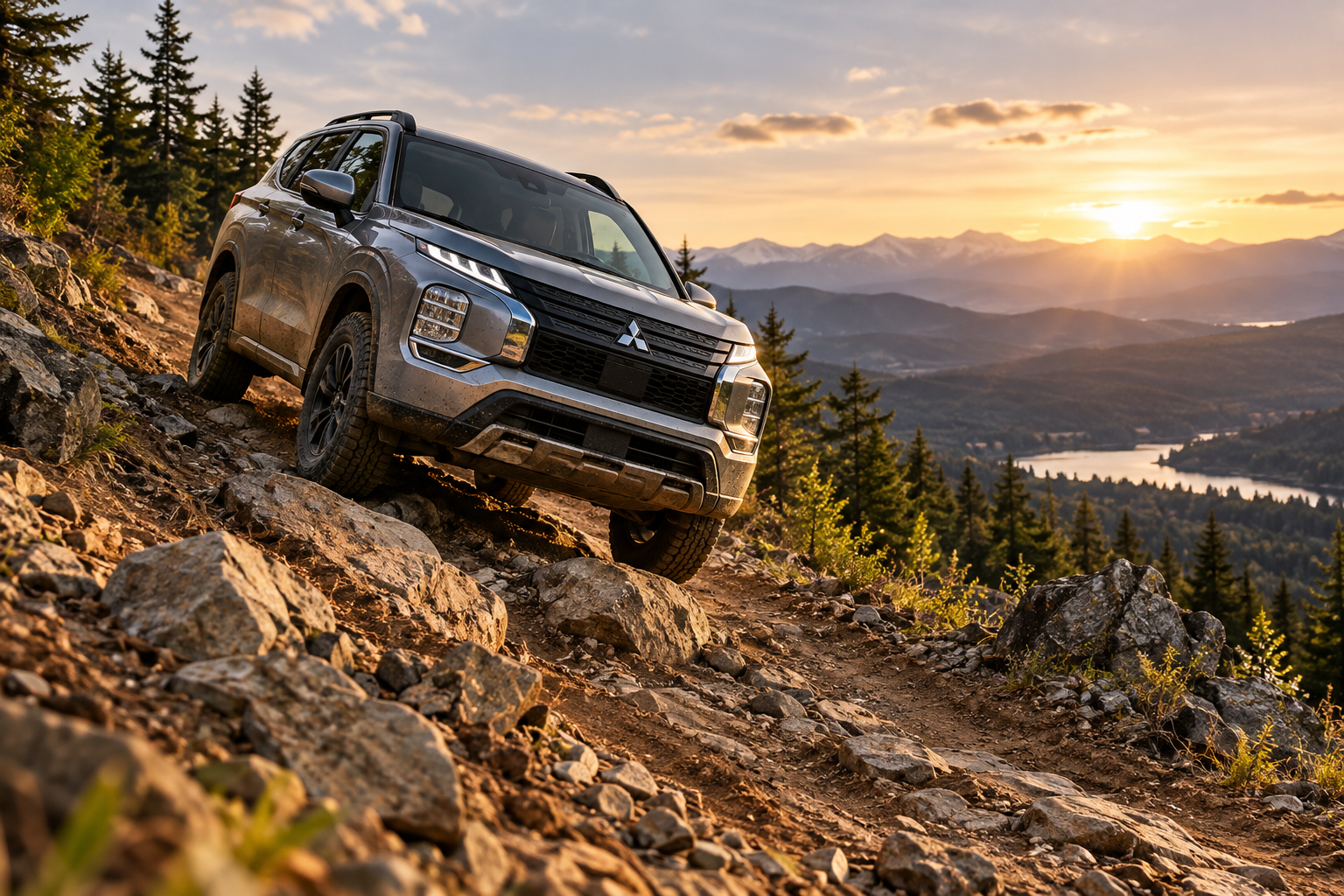
A steep hill is one of the few trail obstacles that can turn a small mistake into a serious problem before the driver has time to correct it. On flat ground, a spinning tire often means a pause and a second attempt. On a grade, the same loss of grip can send a vehicle sliding backward or downhill. That is why good hill driving starts before the tires reach the slope. The useful questions are not whether the truck has four-wheel drive or how impressive the hill looks from below. They are whether the surface will support the vehicle, whether there is room to stop safely, and whether the driver has a controlled exit if the climb does not work.
Read the Whole Hill Before You Commit
The bottom of a hill rarely tells the whole story. A climb may begin on firm gravel and finish on loose rock just as the hood blocks the driver's view. A descent may look straightforward until a diagonal rut forces one wheel to drop and shifts the vehicle sideways. Stop in a secure, level place before the obstacle and inspect the route on foot when it is safe to do so. Look beyond the first tire track. Check the crest, the runout at the bottom, the surface under loose material, and any point where the trail narrows or slopes across the hillside. If you cannot see the exit, you do not yet have a complete plan.
A trail rating is useful context, not permission to drive every feature. Rain, erosion, recent traffic, and a loaded vehicle can change the real difficulty dramatically. Our guide to reading a trail rating explains why a number assigned to a route cannot replace an on-site assessment. On a hill, pay particular attention to exposed roots, smooth bedrock, loose gravel over hardpack, deep washouts, and sharp ledges near the crest. Each can interrupt traction at exactly the point where stopping or reversing would be difficult. The safer choice may be a bypass or another trail, even when other vehicles have made the climb.
A quick visual check should cover these warning signs:
- A blind crest with no confirmed runout or exit
- Loose material, wet rock, or ruts that could pull the vehicle sideways
- Exposure or a recovery position that leaves no safe retreat
These signs do not automatically make a route impossible, but each raises the consequences of a mistake. If the safest line cannot be confirmed, choose another route.
Decide Whether the Grade Is Within Your Limits
There is no universal slope angle that makes a hill safe for every SUV or truck. A vehicle's center of gravity, wheelbase, tires, cargo placement, traction systems, and condition all affect what it can manage. The manufacturer's published limits, where available, are operating boundaries under specified conditions, not targets to chase on an unknown trail. A steep grade with firm, dry rock may offer more grip than a gentler slope coated with wet clay. A narrow track with a drop-off also carries consequences that a wide training area does not. Evaluate the combination of grade, surface, exposure, and escape options instead of focusing on one number.
Secure cargo low in the vehicle, and avoid stacking heavy gear on the roof. If a climb demands a fast run-up or a descent has no safe runout, take the bypass. A hill that cannot be assessed confidently is a hill to skip.
Choose the Line That Keeps the Vehicle Stable
Whenever the trail and terrain allow it, approach a steep climb or descent as straight up or down the fall line as practical. A vehicle pointed across a steep slope is exposed to lateral forces and a greater rollover risk, especially when ruts or rocks suddenly change wheel height. That does not mean aiming blindly for the center of the track. The best line often follows the firmest surface while keeping the wheels supported and avoiding abrupt cross-axle drops. Study where each tire will travel, not just where the front bumper is pointing. A rut that looks shallow from the driver's seat may be deep enough to unsettle the vehicle when a rear tire reaches it.
Look for a line that minimizes sudden steering corrections. Turning sharply while climbing can scrub speed and traction, while turning sharply during a descent can encourage a sideways slide. If the safe route requires a large sideways traverse on a steep grade, reconsider the obstacle. The vehicle's approach, breakover, and departure angles also matter at the transition onto and off the slope, but clearance is only one part of the decision. A line that avoids scraping the bumper yet leaves the tires on loose, unsupported edges is not automatically a better line. Stability and grip come first.
Prepare the Vehicle Before the Slope
Make drivetrain selections on secure ground, before the hill forces a rushed decision. On vehicles equipped with a suitable low-range transfer case, low range can provide finer speed control for a technical climb or descent. The correct procedure for selecting it depends on the vehicle, and some systems have restrictions on speed, transmission position, or surface. Consult the owner's manual rather than copying a shift sequence from another truck. The separate 4H versus 4L field guide explains the drivetrain distinction in detail. Here the practical point is to choose a mode that lets the vehicle move slowly and steadily without requiring abrupt throttle or brake inputs.
Check that tires are in suitable condition and inflated appropriately for the surface and the manufacturer's guidance. Airing down can improve conformity and traction in some off-road conditions, but pressures that are too low can create bead or tire damage, especially during side loading. Confirm that recovery points are suitable and that any spotter understands the plan before the climb begins. Close windows as appropriate, fasten seat belts, secure loose items, and keep arms inside the vehicle. If you need a spotter, agree on hand signals or radio instructions while everyone is still in a safe position. Nobody should stand in the path of a moving vehicle, below it on the hill, or in a potential rollover zone.
Climbing: Use Steady Momentum, Not a Run-Up
A controlled ascent begins with enough momentum to keep moving, not with a high-speed charge at the slope. Approach in the selected gear and range, align the vehicle with the intended line, and feed in throttle smoothly. Sudden bursts of power can break traction and start wheelspin. Once a tire spins, it may polish or excavate the surface, making the next attempt harder. Maintain a pace that allows the suspension to work and gives you time to respond to changing grip. The objective is to keep the tires rolling with traction, not to prove how quickly the vehicle can reach the top.
Be especially careful near the crest. The driver may lose sight of the ground immediately ahead as the hood rises, and the trail can change abruptly on the other side. Do not accelerate blindly over the top. A spotter positioned in a genuinely safe location can help identify the line and the point where the front tires will transition. If the vehicle begins to bounce, surge, or wander, reducing the demand on the tires may restore control; if traction is disappearing, continuing to add throttle usually makes the problem worse. Every climb should have a stopping decision made in advance. Waiting until the vehicle is sideways or sliding is waiting too long.
What to Do When an Uphill Attempt Fails
A failed climb is not automatically an emergency, but improvising under load can create one. If the vehicle stops making progress, avoid spinning the tires and digging deeper into the surface. Keep the vehicle under control, apply the brakes as appropriate, and follow the manufacturer-specific procedure for a stalled or immobilized vehicle on a grade. Do not casually shift into Neutral and allow the vehicle to coast backward. An uncontrolled reverse descent can quickly build speed, compromise steering, and create a rollover risk if the vehicle turns across the slope. The exact recovery method depends on transmission type, drivetrain, vehicle position, and available traction.
When a controlled retreat cannot be made confidently, stop and seek qualified assistance rather than attempting a dramatic recovery. A winch or recovery strap is not a substitute for a safe anchor, rated hardware, and trained people. Recovery gear can store dangerous energy, and the path below a vehicle must remain clear. If the truck is perched on an obstacle, sliding sideways, or threatening to roll, the priority is keeping people out of danger, not getting the vehicle moving immediately. On a remote trail, a difficult hill can become a much larger problem if the group has no communications or exit plan. It is better to spend time planning a recovery than to create a second incident.
Descending: Let the Vehicle Work at Walking Pace
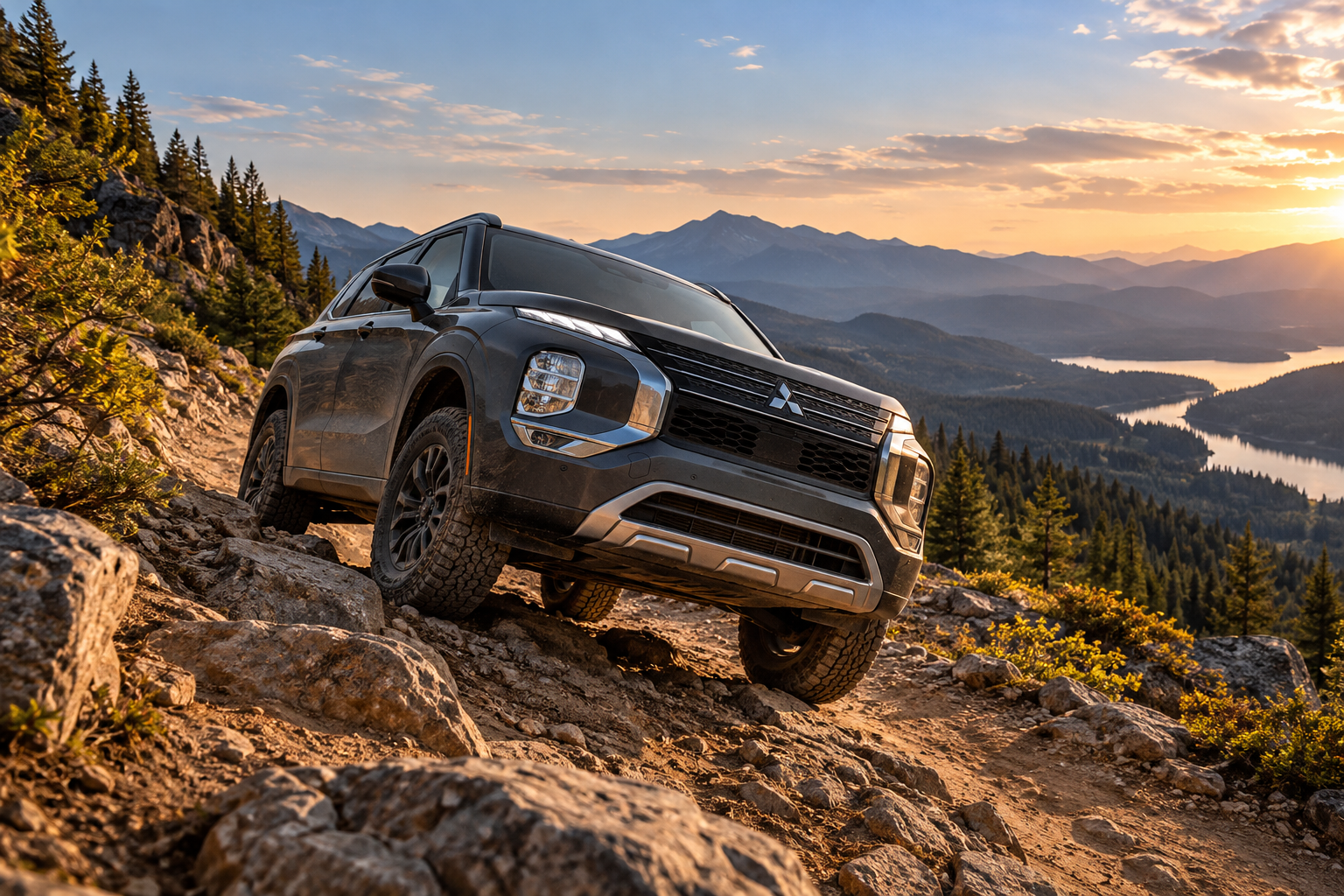
Steep descents often feel more intimidating than climbs because gravity is already doing the accelerating. Begin slowly, with the vehicle aligned down the intended route and an appropriate gear or manufacturer-approved descent mode selected before the front wheels tip over the edge. Low gearing and engine braking can help control speed, but they do not eliminate the need for careful brake use. Apply inputs smoothly and leave enough margin to respond if a tire drops into a rut or rolls onto a slick patch. Avoid treating the brakes as an on-off switch. Sudden braking can overwhelm available grip, particularly on loose material.
Keep the wheels pointed where you want the vehicle to go and resist the urge to steer sharply across the grade. If the vehicle begins to slide, the correct response depends on the surface, vehicle systems, and direction of movement; there is no universal trick that guarantees recovery. Modern ABS and hill-descent control may help maintain control within their design limits, but neither can manufacture traction. The best descent is usually the least dramatic one: slow enough to place the tires, controlled enough to avoid sustained sliding, and planned far enough ahead that you do not need a last-second correction. If the descent cannot be made at a manageable pace, reconsider the route before entering it.
Loose Gravel, Mud, Wet Rock, and Ruts Change the Plan
A hill's surface can matter more than its apparent steepness. Loose gravel may roll beneath the tread, making it difficult to accelerate or brake without sliding. Mud can hide hard ruts and create a greasy layer that offers little lateral grip. Wet rock may be surprisingly slippery, especially when polished or covered with organic material. Deep ruts can help guide the wheels in one direction while trapping them in another. Treat each surface as a new traction problem rather than assuming the technique that worked on the previous hill will work again. A brief inspection often reveals more than another attempt with extra throttle.
Conditions also change while a group is on the trail. The first vehicle may disturb a thin layer of soil, exposing slick clay for everyone behind it. Water running down a track can undercut edges that appeared solid earlier in the day. If the surface is deteriorating, stop and reassess the route rather than allowing the group to feel committed because one truck already passed. Tire tread, pressure, and vehicle weight influence grip, but no tire transforms every surface into a predictable one. On a steep slope, the margin for experimentation is small. Sometimes the correct technique is simply to wait for better conditions or take the longer bypass.
A Practical Pre-Hill Checklist
Before a technical grade, it helps to use the same short routine every time. Repetition reduces the chance that excitement or pressure from other drivers will push an obvious concern out of mind. The checklist is not a guarantee of safety, and it cannot replace the vehicle manual or appropriate training. It is a way to make sure the route, vehicle, and people are ready before the wheels leave level ground. If any answer is uncertain, stop long enough to resolve it. The most expensive mistake is often the one made because the group did not want to spend two more minutes looking at the trail.
Before committing to the hill:
- Walk the route when safe, checking the crest, surface, ruts, exposure, and exit.
- Identify a stable line that avoids unnecessary cross-slope travel.
- Confirm the vehicle's clearance, load security, tires, and drivetrain setting.
- Agree on spotter signals, communication, and safe positions for bystanders.
- Decide in advance what will trigger a stop, retreat, or bypass.
- Keep the next vehicle and all spectators clear of the hill and runout.
Once the plan is clear, drive it calmly. A controlled pace makes it easier to notice whether the tires are gripping, whether the vehicle is staying on line, and whether conditions are changing. If reality no longer matches the plan, stop when it is safe rather than forcing the original decision. Off-road driving rewards flexibility more often than stubbornness.
Bottom Line: Control Beats Commitment
Driving steep off-road hills safely is a sequence of decisions, not a single trick. Inspect the entire obstacle, judge traction and exposure, choose a line that keeps the vehicle stable, and select the correct drivetrain mode before the slope begins. Climb with measured throttle and a controlled pace. Descend slowly enough that the tires can keep gripping and the driver can respond without abrupt corrections. Keep spotters and other vehicles out of danger zones, and treat electronic aids as useful support rather than a replacement for judgment. Above all, make the decision to stop or bypass while you still have room to do so.
No guide can determine whether a specific hill is safe from a description alone. Terrain changes, vehicles differ, and recovery options may be limited. Follow your owner's manual, local trail rules, and appropriate hands-on training. When the line is uncertain, the surface is deteriorating, or the consequences of a slide are unacceptable, turning around is the right off-road decision. A good day on the trail ends with the vehicle, the people, and the route intact—not with proof that every climb was possible.
For broader trail stewardship, consult Tread Lightly! guidance and the National Park Service off-road vehicle information before traveling on managed public land. Local closures, permitted routes, and vehicle rules still take priority.