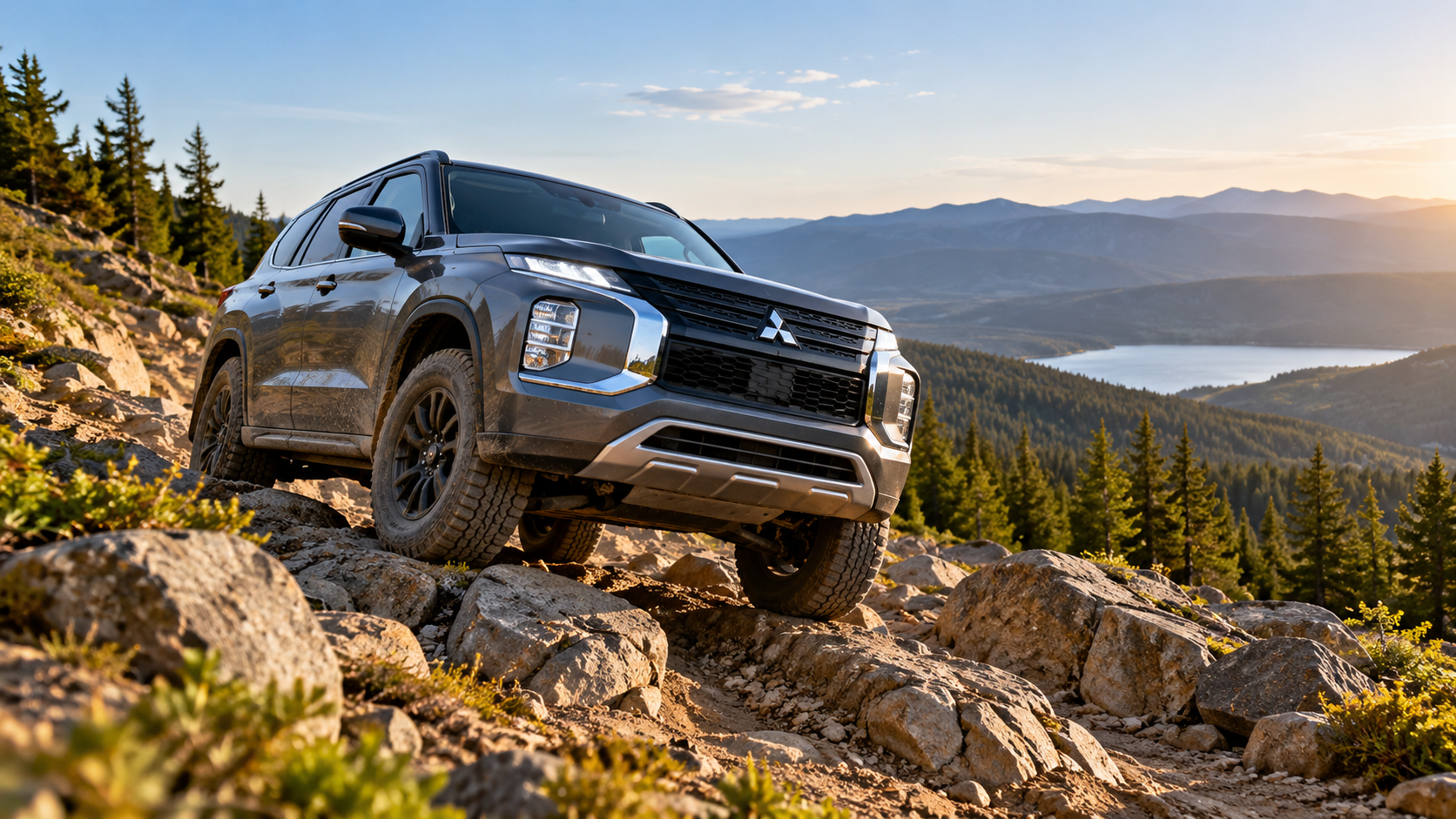
Ground clearance gets most of the attention when people compare off-road vehicles, but clearance alone does not tell you whether an SUV can climb onto a ledge, cross a sharp ridge, or descend without dragging its rear bumper. Two vehicles can have similar clearance under the chassis and behave very differently on the same obstacle because their bumpers, overhangs, wheelbases, tires, and suspension geometry place the body in different positions relative to the ground. That is where approach, breakover, and departure angles become useful.
What Are Approach, Breakover and Departure Angles?
Off-road angles are geometric measurements that describe how steep an obstacle a vehicle can theoretically negotiate without its body contacting the terrain. They are normally expressed in degrees, and a larger number generally provides more geometric freedom. The measurements are especially relevant on rocky trails, erosion channels, abrupt climbs, steep descents, berms, and other terrain where the ground changes angle quickly.
Before heading into difficult terrain, it is also worth knowing the vehicle's condition and background rather than evaluating capability only from visible modifications. A vehicle-history service such as HideAutoVin can be relevant when researching a used SUV, particularly if previous damage or repairs could affect what you are starting with. Geometry figures describe the design of a vehicle; they do not confirm that an individual example remains in its original mechanical condition.
Approach Angle: The First Contact Point
Approach angle describes how steeply the front of a vehicle can meet an obstacle before the lowest forward part of the body contacts the ground. Imagine a straight line running from the contact patch of the front tire toward the lowest part of the front bumper or another component ahead of the wheel. The angle between that line and the ground represents the practical idea behind the approach measurement.
Breakover Angle: Why Wheelbase Matters So Much
Breakover angle describes the ability to pass over a crest without the center of the vehicle contacting the ground. This is the measurement that explains why simply adding ground clearance does not solve every off-road geometry problem. When the front axle has already crossed a ridge but the rear axle has not reached it, the center of the chassis can become the lowest part relative to the obstacle.
Ground Clearance and Breakover Are Not the Same Thing
Ground clearance is usually a vertical measurement between the terrain and a defined low point beneath the vehicle, while breakover angle describes the relationship among clearance, axle position, and the shape of a crest. Both measurements matter, but they answer different questions. Ground clearance helps indicate what the vehicle can pass over on relatively level terrain; breakover helps indicate how sharply the terrain can change underneath the center of the vehicle.
Departure Angle: Getting Down Without Dragging the Rear
Departure angle is essentially the rear counterpart to approach angle. It describes how steeply the vehicle can move away from an obstacle or descend a change in terrain without the rear overhang contacting the ground. Once the rear tire passes the edge of a ledge or begins moving down a slope, the bumper, exhaust, tow equipment, spare-tire carrier, or other rear components may become vulnerable.
Which Off-Road Angle Matters Most?
There is no single answer because the limiting measurement changes with the terrain. A trail dominated by abrupt ledges may expose a poor approach angle repeatedly. Sharp crests can make breakover the main concern, while steep drop-offs punish vehicles with long rear overhangs. A capable off-road setup is therefore less about maximizing one number and more about having geometry suited to the obstacles the vehicle will actually encounter.
The easiest way to understand the differences is to connect each measurement with the situation in which it becomes critical. Before attempting an obstacle, think about the vehicle in stages rather than as one rigid rectangle moving forward. The front, center, and rear reach the same terrain at different moments, so a line that looks comfortable at first can still create contact later in the maneuver. Reading those stages separately makes the three angle figures much easier to apply in practice.
- Approach angle: when the front bumper is moving toward a steep climb, rock face, ledge, ditch bank, or sudden rise in the trail.
- Breakover angle: when the front axle has crossed a crest but the center of the chassis still has to pass over the highest point.
- Departure angle: when the rear axle is leaving a ledge, descending a steep transition, or moving away from an obstacle while the rear overhang remains above higher ground.
- Multiple angles together: when an obstacle combines a steep entrance, narrow crest, and abrupt exit, forcing the vehicle to use all three parts of its geometry in sequence.
Why a Bigger Angle Is Usually Better — but Not the Whole Story
If everything else were equal, larger approach, breakover, and departure angles would be preferable because they give the vehicle more room before body contact occurs. Real vehicles, however, are packages of compromises. Passenger space, cargo capacity, crash structures, towing hardware, aerodynamics, fuel economy, wheelbase, and road comfort can all influence dimensions that also affect off-road geometry.
How Ground Clearance, Tires and Wheelbase Change the Picture
Approach, breakover, and departure angles are closely connected to other vehicle dimensions. Raising the body relative to the ground can improve some geometric limits, while larger-diameter tires can increase axle height and alter the relationship between the bumpers and terrain. But changes rarely affect every measurement equally, and modifications can introduce new limitations.
Before assuming that one modification has transformed a vehicle's off-road capability, consider the entire package:
- Identify the original limiting geometry. Determine whether the vehicle most often contacts the front, center, or rear rather than assuming that more height is always the answer.
- Check what the modification actually moves. Larger tires, a suspension lift, and a redesigned bumper change different parts of the vehicle and therefore do not produce identical geometric gains.
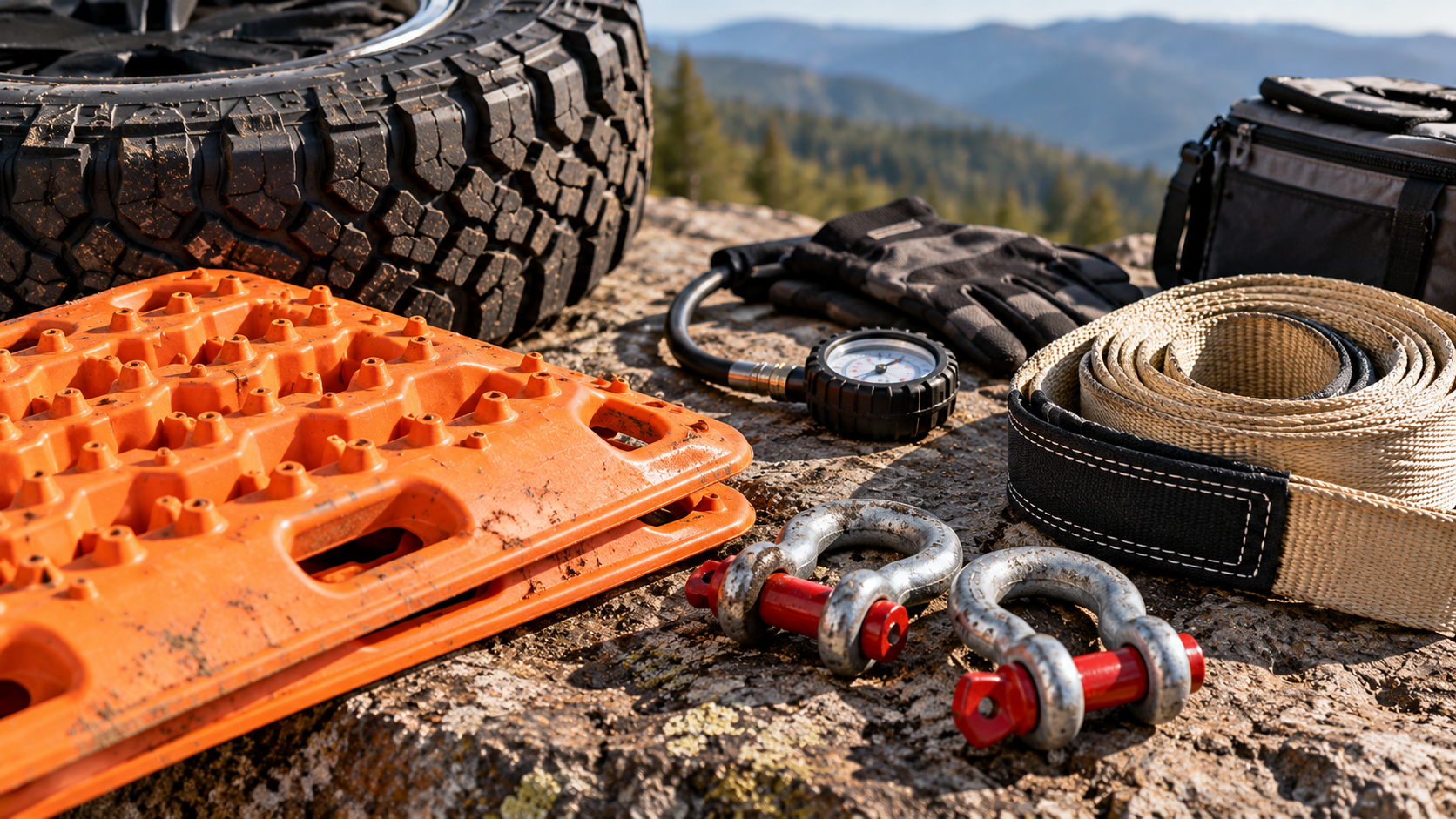
- Look for new low points. Steps, brackets, tow equipment, exhaust components, skid plates, and recovery hardware can become the real contact point after other parts are raised.
- Consider tire clearance and suspension travel. A larger tire that fits while parked may still contact bodywork when the suspension compresses or the steering reaches full lock.
- Reassess the vehicle under normal load. Passengers, camping equipment, tools, recovery gear, and accessories can reduce ride height and change the practical margin available on the trail.
- Test progressively. A theoretical improvement should not be treated as permission to attack a larger obstacle immediately; verify the new setup on controlled terrain first.
The goal is not to chase the largest numbers. It is to understand what changed and whether that change addresses the terrain the vehicle is expected to encounter. A modification is most useful when it improves the part of the vehicle that was actually limiting progress while preserving enough margin for suspension movement, normal trail loads, and uneven ground. Looking at the complete setup also helps prevent a gain in one measurement from hiding a new low point or clearance problem somewhere else on the vehicle.
Published Specifications vs. Real-World Clearance
Manufacturer specifications are valuable because they create a standardized reference point, but they cannot describe every real-world situation. Tire pressure, cargo, passengers, suspension compression, wheel position, surface deformation, and aftermarket equipment can all change the available margin. Even the exact line chosen across an obstacle can determine whether the vehicle touches down.
How to Read an Obstacle Before Driving Over It
The safest way to use off-road geometry is to evaluate the obstacle before committing the vehicle. On difficult terrain, stopping and looking from outside is often more informative than trying to judge everything through the windshield. From the driver's seat, the hood can hide the immediate ground and make a sharp transition appear smoother than it really is.
The objective is not to prove that the vehicle can touch the theoretical maximum angle. The objective is to cross the obstacle with control and with enough margin for the imperfect conditions that specification sheets cannot predict. Leaving that margin matters because tire placement, suspension compression, loose surfaces, and small changes in steering can alter the vehicle's position after the maneuver has already begun.
Can Driving at an Angle Improve Clearance?
Approaching some obstacles diagonally can change which wheel reaches the transition first and may reduce the immediate geometric demand compared with meeting the obstacle perfectly square. This technique is often useful on ledges, drainage channels, and uneven crests, but it introduces other considerations because the vehicle is now experiencing more side-to-side suspension movement.
For that reason, driving at an angle should be treated as a line-selection technique rather than a universal solution to poor geometry. If the obstacle is too large for the vehicle, changing the line may simply move the point of contact somewhere else. A diagonal approach should therefore be chosen only when it improves clearance without creating an unacceptable side slope, unstable wheel loading, or a new risk to another part of the chassis.
What Happens When You Exceed the Angles?
Exceeding an off-road angle does not always produce dramatic damage. Sometimes the first sign is a plastic air dam or skid plate lightly touching the terrain. In other situations, the vehicle can strike a bumper, exhaust component, underbody structure, or recovery point with enough force to bend or break something. The consequences depend on what contacts the ground and how much energy is involved.
Protective equipment can reduce the consequences of occasional contact, but protection should not be confused with additional clearance. A skid plate allows a vulnerable area to tolerate contact better; it does not move the obstacle away from the vehicle. Good line choice remains important even on a heavily protected 4x4.
Off-Road Angles vs. Other Capability Numbers
Vehicle marketing often places ground clearance, water-fording depth, towing capacity, tire size, and off-road angles together. These specifications describe different capabilities and should not be substituted for one another. A high water-fording figure does not imply that the vehicle can cross a sharp ridge, just as an excellent approach angle says nothing about the depth of water the engine, electronics, breathers, and cabin can safely tolerate.
A useful off-road comparison therefore looks at several systems together. Geometry tells you whether the body can physically fit through the terrain. Tires and drivetrain help determine whether the vehicle can generate enough traction to move through it. Suspension influences how well the tires stay in contact with irregular surfaces. Protection determines how vulnerable important components are when contact does happen.
Common Mistakes When Comparing Off-Road Geometry
One common mistake is comparing the best available figure from one vehicle with the standard figure from another. Tire packages, body styles, suspension options, and bumper configurations can change the numbers substantially. Comparisons should use equivalent configurations whenever possible, with the same type of factory equipment and the exact body style identified. Otherwise, a small difference on paper may reflect configuration rather than a meaningful advantage in basic vehicle design.
Finally, drivers sometimes treat the published limit as a target. Off-road angles are better understood as boundaries. Staying comfortably inside those boundaries generally means less contact, less stress, and more room for unexpected holes, loose rocks, suspension movement, and imperfect judgment. That extra margin is especially valuable when visibility is limited or the surface changes under the tires, because real terrain rarely matches the clean geometry used for a published specification.
What Should You Look for When Choosing an Off-Road SUV?
If technical trails are part of the plan, start by looking at all three angles together rather than searching for the highest approach figure. Then consider the wheelbase, ground clearance, tire size, underbody protection, recovery points, suspension design, and the availability of appropriate low-speed drivetrain controls. The best combination depends on where the vehicle will actually be driven.
Conclusion
Approach, breakover, and departure angles explain three different ways an off-road vehicle can run out of geometric clearance. Approach angle determines how abruptly the front can meet rising terrain, breakover angle describes how sharp a crest can be before the center touches, and departure angle determines how cleanly the rear can leave an obstacle. Larger angles generally provide more freedom, but none of the measurements should be interpreted in isolation.
Wheelbase, overhangs, ground clearance, tire diameter, suspension movement, vehicle load, accessories, traction, and line choice all affect what happens beyond the specification sheet. The most capable driver is not necessarily the one with the largest published number, but the one who understands which part of the vehicle is approaching its limit and chooses a line accordingly. Once the three angles are understood as parts of the same geometric system, off-road specifications become far more useful both when choosing a vehicle and when deciding whether to drive over the obstacle directly ahead.