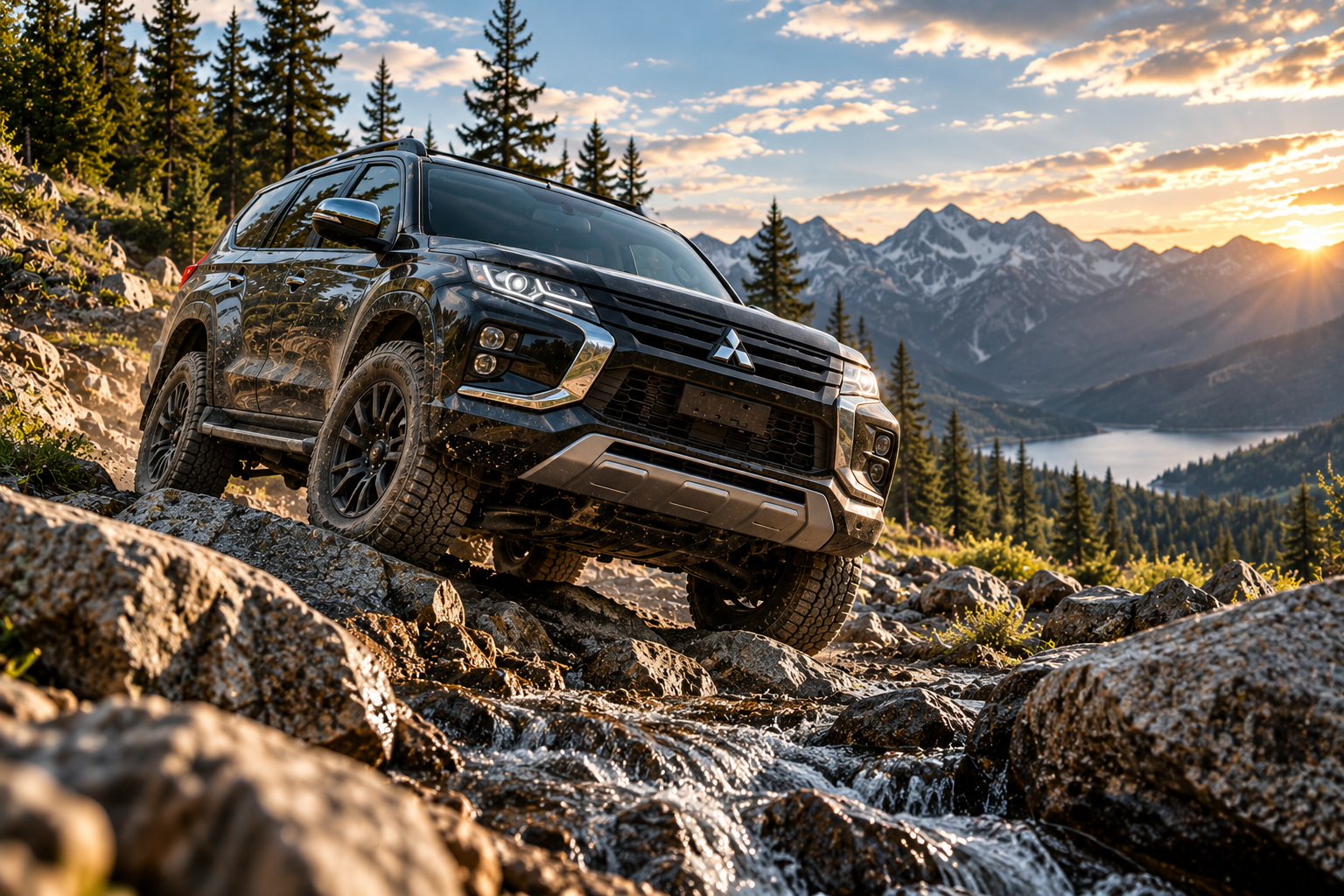
Locking differentials are often treated as one of the upgrades every serious off-road vehicle eventually needs. Watch enough rock-crawling videos or browse enough build lists and lockers can start to look almost mandatory. In reality, many drivers can travel surprisingly far with open differentials, modern traction control, good tires, appropriate tire pressure, and careful line choice. A locker becomes valuable when the terrain repeatedly creates situations where one wheel loses traction or leaves the ground and you need the wheel with grip to keep driving the vehicle forward. So, do you really need a locking differential for off-roading? For ordinary dirt roads, forest tracks, moderate trails, snow, and many recreational trips, probably not. For technical rocks, deep ruts, steep uneven climbs, difficult mud, or trails where suspension articulation regularly unloads a wheel, a locker can make a major difference. The important question is not whether lockers are “better,” but whether the terrain you actually drive creates the traction problem they are designed to solve.
What Does a Locking Differential Actually Do?
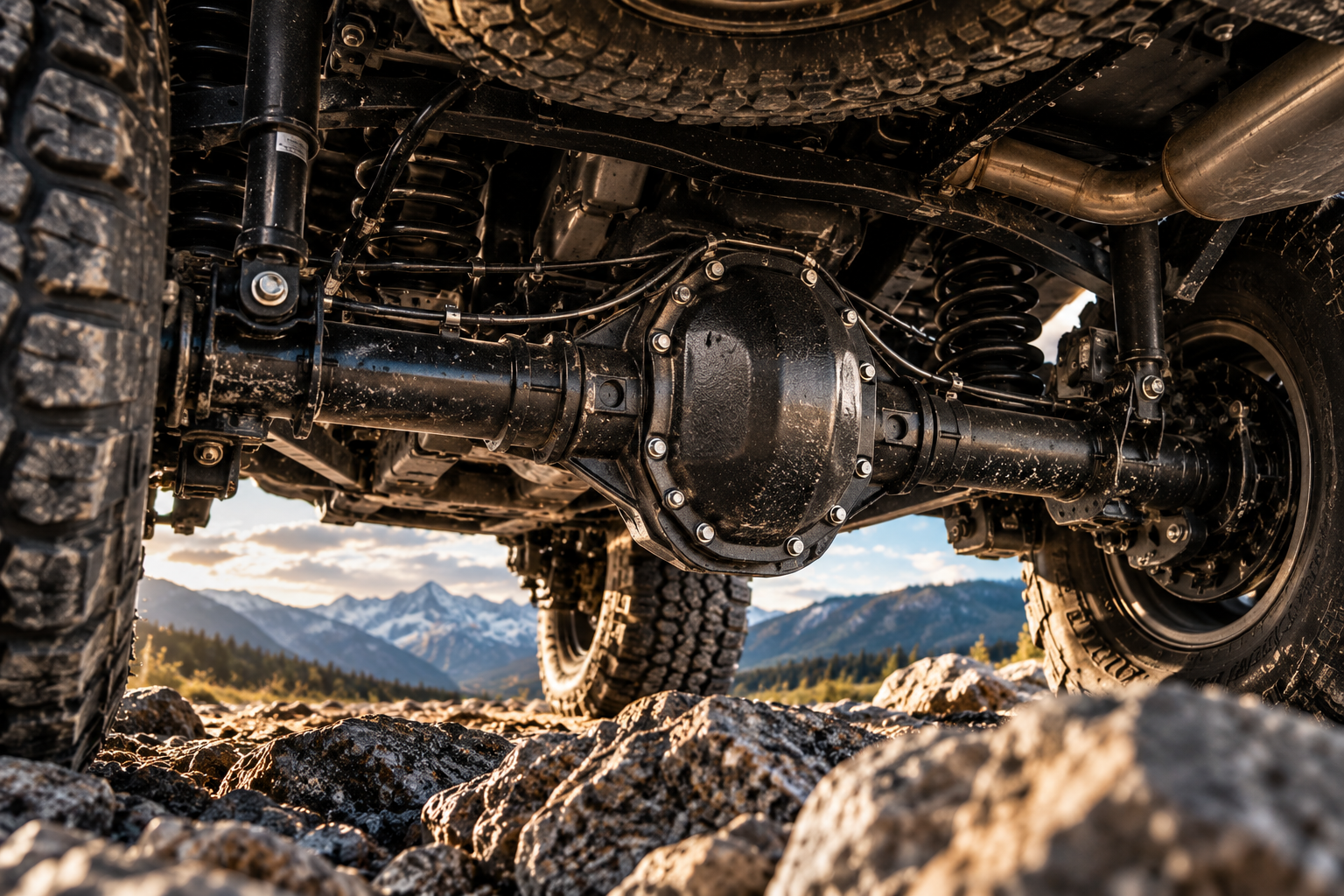
A differential normally allows the left and right wheels on the same axle to rotate at different speeds. That ability is essential when turning because the outside wheel travels farther than the inside wheel. An open differential handles this smoothly and quietly, which is why it works so well during everyday driving. The disadvantage becomes obvious off-road when one tire has much less resistance or traction than the other.
A locking differential changes that relationship by coupling both axle shafts so the wheels rotate together. As Jeep’s explanation of locking differentials describes, locking both wheels on an axle to the same speed can maintain useful drive when one tire is on a slippery surface, buried in loose material, or lifted during articulation. Instead of allowing the low-traction wheel to become the limiting factor, the axle can continue using the tire that still has grip.
That does not mean a locker magically creates traction. The tires still need to grip the ground, and the vehicle still needs sufficient clearance, suitable gearing, and an appropriate line through the obstacle. What the locker changes is the drivetrain’s ability to use the available traction at both ends of an axle when conditions become uneven.
Why Open Differentials Can Struggle Off-Road
Open differentials are not inherently bad off-road. On relatively even terrain where both tires remain firmly planted, they can work perfectly well. Problems become more noticeable when one wheel becomes significantly easier to rotate than the other. A cross-axle rut, ledge, deep hole, or slippery patch can unload one tire while the other remains on a surface with plenty of grip.
Imagine climbing a diagonal ledge. The suspension extends on one side until a rear tire becomes lightly loaded or leaves the ground. With a conventional open differential, that situation can produce wheelspin at the unloaded tire while the tire sitting firmly on the rock contributes less useful drive than you would like. A locked axle prevents the two wheels from rotating independently, allowing the loaded tire to continue contributing to forward movement.
This is one reason suspension articulation and differential behavior are closely related. Keeping tires on the ground reduces the number of situations in which a locker becomes necessary. A vehicle with appropriate suspension travel, sensible tire pressure, and a carefully chosen line may cross an obstacle with open differentials that another vehicle attacks with a locker engaged.
When Do You Actually Need a Locker?
For most recreational drivers, the answer becomes clearer if you ignore modification lists and pay attention to what repeatedly stops the vehicle on real trails. If your 4x4 consistently reaches obstacles where a wheel lifts or spins while another wheel on the same axle still has useful traction, a locker addresses a genuine limitation. If that rarely happens, spending money elsewhere may improve the vehicle more.
A locker becomes particularly useful when the trail combines low speed with major differences in traction from one side of an axle to the other. This is different from simply driving on a uniformly slippery road. Four equally slippery tires present a tire-grip problem; one unloaded tire and one firmly planted tire present exactly the kind of differential problem a locker can help solve.
Typical situations where a locking differential provides a clear advantage include:
- rock crawling, where ledges and holes frequently unload individual wheels;
- deep cross-axle ruts, where diagonal wheels can lose normal load and traction;
- steep uneven climbs, especially when maintaining slow controlled progress is safer than using momentum;
- technical mud, where traction can vary dramatically from one side of the axle to the other;
- deep snow or sand, particularly when one tire finds a firmer surface while another begins spinning;
- slow technical trails, where minimizing wheelspin and maintaining controlled forward movement matters more than speed.
The common theme is not simply that these conditions are difficult. It is that traction is uneven. If every tire is sitting on the same low-grip surface, locking the axle cannot manufacture grip that the tires do not possess. But when one side has usable traction and the other does not, forcing both axle shafts to rotate together can turn an otherwise wasted traction opportunity into forward progress.
Do You Need Lockers for Normal Trail Driving?
Most people who use a 4x4 for camping access, gravel roads, maintained forest routes, moderate two-track trails, or occasional snow do not need front and rear lockers to enjoy the vehicle. Good all-terrain tires, appropriate pressures, adequate clearance, low-range gearing when required, and sensible driving technique often matter more during this kind of use.
Modern vehicles can also compensate for open differentials with electronic traction-control systems. When the system detects excessive wheelspin, it may apply braking force to the spinning wheel so torque can be redirected through the differential toward the opposite side. These systems are not mechanically identical to a true locker, but good calibration can make an open-differential vehicle much more capable than the basic hardware description suggests.
Jeep notes that its vehicles can use mechanical, electronic, or brake-assisted differential systems to improve power delivery and traction. That is important when evaluating a vehicle because simply reading “open differential” on a specification sheet does not tell you how the complete traction-management system behaves on the trail. For occasional recreational off-roading, learning what the standard vehicle can do before modifying it is usually worthwhile. You may discover that tires, recovery equipment, underbody protection, or additional ground clearance solves more real-world problems than a locker would.
Locker vs. Limited-Slip Differential
A limited-slip differential and a locking differential are sometimes discussed as if they were interchangeable, but they solve the traction problem differently. An LSD allows some difference in wheel speed while using clutches, gears, or another mechanism to bias torque when one wheel begins to lose traction. That makes it easier to live with during everyday road driving because the axle can still accommodate the different wheel speeds required during turns.
A true locker goes further by mechanically or electronically coupling the axle shafts when engaged. Jeep’s differential guide distinguishes an LSD, which biases torque while retaining some wheel-speed differentiation, from a locked differential that forces both wheels to rotate together. The latter provides a more direct solution when a tire becomes heavily unloaded during technical off-road driving.
For a vehicle that spends most of its life on pavement and sees moderate trails, an LSD can therefore be a useful compromise. For a vehicle expected to crawl over large rocks or repeatedly cross terrain that lifts wheels, a selectable locker offers a much more decisive traction advantage while still allowing the differential to operate normally when the locker is disengaged.
Rear Locker or Front Locker: Which Matters More?
If you are adding only one selectable locker, the rear axle is commonly the practical starting point for a mixed-use off-road vehicle. Rear lockers are widely offered as factory equipment, and locking the rear axle can provide a substantial improvement on climbs, ruts, rocks, and other situations where rear-wheel traction becomes uneven.
Toyota, for example, describes the electronically locking rear differential available on the Tundra as distributing engine power evenly to both rear wheels so they move at the same speed and provide more grip in low-traction conditions. A front locker can add another level of capability because both front wheels can continue pulling even when one becomes unloaded. That can be extremely useful in technical rock crawling, but locking the front axle can also affect steering. When both front wheels are forced to rotate at the same speed, the vehicle naturally becomes less willing to follow a tight turn, especially on surfaces with substantial grip.
Front and rear lockers therefore serve different stages of a build rather than simply doubling the same benefit. A rear selectable locker can transform the capability of many trail vehicles without significantly changing normal driving when disengaged. Adding a front locker becomes more compelling when the vehicle routinely encounters terrain where rear locking alone is no longer enough.
Factory examples show the same progression. The current Jeep Wrangler Rubicon capability specification includes available front and rear Tru-Lok electronic locking differentials as part of a broader package designed around technical terrain, alongside low-range gearing, articulation features, and underbody protection.
Selectable vs. Automatic Lockers
Not every locking differential works the same way. A selectable locker remains open during normal driving and locks only when the driver activates it through an electrical, pneumatic, or mechanical control. An automatic locker uses its internal design to engage and release according to torque and wheel-speed conditions without requiring a dashboard command.
For a vehicle that spends substantial time on public roads, selectable lockers are attractive because the differential behaves normally until additional traction is actually needed. You can drive through parking lots, highway ramps, and tight pavement turns without keeping the axle permanently locked, then engage the locker before a difficult trail obstacle.
The main categories can be summarized as follows:
- Electronic selectable lockers use an electrical actuator and allow the driver to command engagement when vehicle conditions permit it.
- Air lockers use compressed air to lock the differential and usually require an onboard compressor and associated air lines.
- Cable or mechanically selectable systems use a mechanical control rather than an electrical or pneumatic actuator.
- Automatic lockers engage according to their internal mechanical design and do not require the driver to press a switch.
- Factory traction-control alternatives use braking and electronic control rather than physically locking both axle shafts together.
The best choice depends on how the vehicle is used. A dedicated trail rig may tolerate the behavior of an automatic locker more easily than a daily-driven SUV. A selectable system provides greater control but adds actuators, wiring, air components, or other hardware that must remain reliable. Factory systems can integrate the locker with the vehicle’s terrain modes and safety electronics, which is another reason aftermarket modifications should be planned around the specific platform rather than treated as universal upgrades.
Why You Should Not Leave a Locker Engaged Everywhere
If locking both wheels together improves traction, it can seem logical to leave the differential locked whenever you are off-road. That misses an important part of how a differential works. During a turn, the outside tire needs to travel farther than the inside tire. An unlocked differential allows that speed difference naturally; a locked differential does not.
On loose terrain, the tires can often slip enough to accommodate the difference, but steering effort and turning behavior can still change. On firm high-traction surfaces, forcing both wheels to rotate together can cause tire scrub, increased turning resistance, and unnecessary stress. Jeep’s official 4x4 glossary specifically warns against using a locking differential on dry paved roads.
Selectable lockers should therefore be treated as obstacle tools rather than default driving modes. Engage the locker before the terrain creates the traction problem it is designed to solve, maintain smooth throttle inputs while crossing the obstacle, and disengage it once normal differential action becomes more useful again.
The manufacturer’s instructions always take priority because factory systems may impose additional restrictions. Some vehicles only permit locker engagement in certain transfer-case ranges, at low speeds, or with particular drive modes selected. Other systems can automatically change traction-control or stability-control behavior when a differential is locked.
Can a Locker Make Off-Roading Worse?
Yes, when it is used at the wrong time. More available traction can place greater load on axle shafts, CV joints, driveshafts, gears, and other drivetrain components because the tires may stop acting as the easiest point for torque to escape. Aggressive throttle with a locked differential on high-grip terrain can therefore expose weak components that previously survived because a tire simply spun.
A locker can also encourage poor technique. If the driver approaches every obstacle by locking both axles and adding throttle, the vehicle may climb farther into a situation where clearance, stability, or tire placement becomes the real limitation. Mechanical traction does not prevent a differential housing from hitting a rock, a rocker panel from contacting a ledge, or a vehicle from becoming unstable on a side slope.
This is why lockers work best together with low-range gearing and deliberate driving. Slow wheel speed gives the tires time to find grip, reduces shock loading, and allows the driver to stop before a bad line becomes expensive. The objective is not to make all four tires spin; it is to use the available traction with the least amount of wheelspin necessary.
What Should You Upgrade Before Adding a Locker?
Before spending money on differential work, look at what actually limits the vehicle. A locker is highly effective at solving one particular problem, but it does not solve every off-road weakness. A vehicle on unsuitable street tires may gain more capability from better tires. A vehicle that repeatedly hits its underbody may need protection or additional clearance. A driver who routinely becomes stuck after losing tire contact may benefit from pressure adjustment and better line selection before changing axle hardware.
For many recreational builds, a sensible order of priorities looks like this:
- appropriate off-road tires matched to the terrain you actually drive;
- correct trail tire pressure and equipment to air down and reinflate safely;
- recovery points and basic recovery equipment before attempting more difficult routes;
- underbody protection where rocks, ledges, and ruts threaten vulnerable components;
- adequate ground clearance and suspension behavior for the obstacles you encounter;
- low-range gearing, if the platform offers it and technical crawling is part of the intended use;
- locking differentials when uneven wheel traction becomes a recurring limitation.
There is no universal order that fits every build, but this approach prevents the locker from becoming an expensive solution to the wrong problem. If your vehicle is constantly scraping before traction becomes an issue, solve the clearance problem first. If all four tires spin in deep mud, a locker may not compensate for unsuitable tread. Build around evidence from your own trail use rather than around a checklist of popular modifications.
How to Tell If You Are Ready for a Locker
The strongest argument for installing a locker is repeated experience. If you have reached the point where the vehicle regularly stops because one wheel spins while the other wheel on that axle clearly has usable traction, you have identified the exact situation a locker is intended to address. That is much more meaningful than adding one simply because other off-road builds have them.
Pay attention to how obstacles are currently being solved. If you need excessive momentum to cross ruts that could otherwise be crawled, a locker may allow a slower and more controlled approach. If electronic traction control eventually gets the vehicle moving but requires significant wheelspin and braking intervention, a mechanical lock may provide a more immediate response in difficult terrain.
On the other hand, if your current trails rarely challenge articulation and the vehicle climbs everything at sensible speeds, there may be little reason to modify the differentials yet. Keeping the vehicle simpler, lighter, and closer to factory configuration can have its own advantages, especially for a daily-driven 4x4.
Conclusion: A Locker Is a Tool, Not a Requirement
You do not need a locking differential simply because you drive off-road. Many dirt roads, overland routes, snow-covered tracks, forest trails, and moderate obstacles can be handled with open or limited-slip differentials, good tires, appropriate pressure, low-range gearing, traction control, and careful driving. A locker becomes valuable when the terrain repeatedly creates large traction differences between the two wheels on an axle.
For most mixed-use vehicles, a selectable rear locker is a logical first step when that limitation appears. Front and rear lockers become more valuable as the terrain becomes increasingly technical and wheel lift becomes common. But installing them before understanding the vehicle’s existing limitations can put money into a capability you rarely use.
The best off-road build is not the one with the longest equipment list. It is the one whose equipment solves problems the vehicle and driver actually encounter. Learn how your current differential and traction-control systems behave, improve the fundamentals first, and add a locker when the trail—not the modification checklist—shows you why you need one.