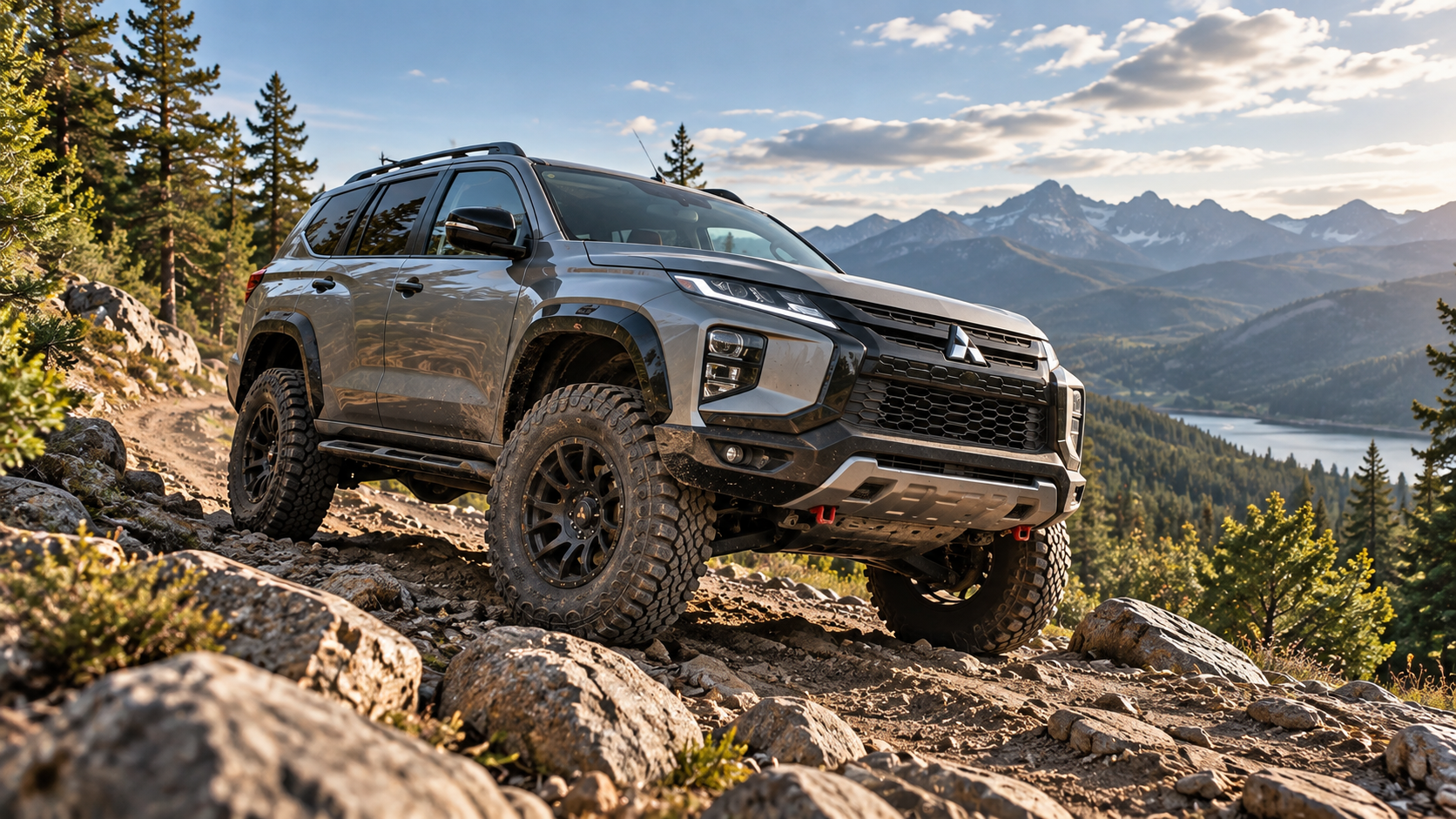
A suspension lift can make a four-wheel drive more useful, but lift height by itself is a poor measure of capability. The useful question is how much height your vehicle needs for the tires, terrain, load, and suspension travel you actually use—without creating steering problems, awkward driveline angles, excessive body movement, or a daily commute you begin to hate. For many mixed-use trucks and SUVs, the smartest lift is deliberately moderate. It creates enough room to solve a real trail limitation while keeping the vehicle close enough to its original geometry that it remains predictable on pavement.
That distinction matters because a lift changes more than the distance between the body and the ground. On independent front suspension, raising ride height can move caster and camber away from their intended ranges; manufacturers such as BILSTEIN and Old Man Emu/ARB specifically design control arms to correct geometry on lifted applications. Meanwhile, increasing vehicle height raises components of the center of gravity, which is one reason large lifts demand more respect in emergency maneuvers. The goal is therefore not “maximum lift.” It is the smallest complete suspension package that clears the obstacle or tire size you need and still behaves correctly everywhere else.
What a 1- to 2-Inch Lift Usually Gets Right
A mild lift is often the sweet spot for a dual-purpose 4x4 because it can add useful clearance around the body and improve room for a modest tire increase without moving every suspension relationship dramatically away from stock. Exact outcomes are platform-specific, but this range often preserves familiar steering, reasonable entry and exit height, manageable alignment correction, and compatibility with factory-style components. It can also compensate for added constant load when springs are selected by weight rather than chosen only for advertised lift.
The key advantage is not that two inches is universally safe; it is that small changes usually leave more of the original engineering envelope available. ARB notes that lifting an IFS vehicle changes steering geometry and may move caster and camber beyond what factory control arms can correct. Its application-specific upper control arms commonly reference geometry correction around a 50 mm (roughly two-inch) lift. That is useful evidence of why even a moderate lift should be treated as a system and aligned afterward—not proof that every vehicle should automatically be raised two inches.
What Changes Around 2 to 3 Inches
As lift height increases, the probability of secondary work rises. On many independent-front-suspension platforms, control-arm angles become steeper, available droop can shrink, ball-joint operating angles change, and CV joints run at greater angles at normal ride height. The vehicle may still drive very well when the package is engineered correctly, but the build is no longer just “springs and shocks.” Alignment range, shock length, bump stops, sway-bar links, brake hoses, steering behavior, and driveline geometry all deserve deliberate checks.
This is where quality matched components matter. BILSTEIN describes its lifted-vehicle control arms as using increased caster and revised ball-joint angles to restore alignment capability and suspension travel. ARB similarly warns that factory arms may not have enough adjustment after a lift, which can contribute to wandering or delayed steering and premature tire or ball-joint wear. Those are exactly the symptoms that make a trail upgrade feel like a downgrade every weekday.
Why Bigger Lifts Create Bigger Geometry Problems
A suspension is a collection of arcs and angles. Control arms, tie rods, CV shafts, panhard rods, driveshafts, and sway bars all move through defined paths. Raising static ride height changes where those parts sit within their travel. On an IFS vehicle, that can reduce droop if the shock reaches extension sooner, increase joint angles, and make factory alignment targets harder to achieve. On solid-axle vehicles, a taller lift can shift axle position laterally or fore-aft and alter caster, pinion angle, and steering-link relationships depending on the suspension design.
This is why a tall lift built from a few inexpensive spacers can be worse off-road than a smaller, well-damped suspension package. Height does not automatically create articulation, control, or traction. If the suspension tops out easily, binds a joint, loses alignment, or forces the tire to skip across rough terrain, the extra visual clearance has not translated into better usable performance.
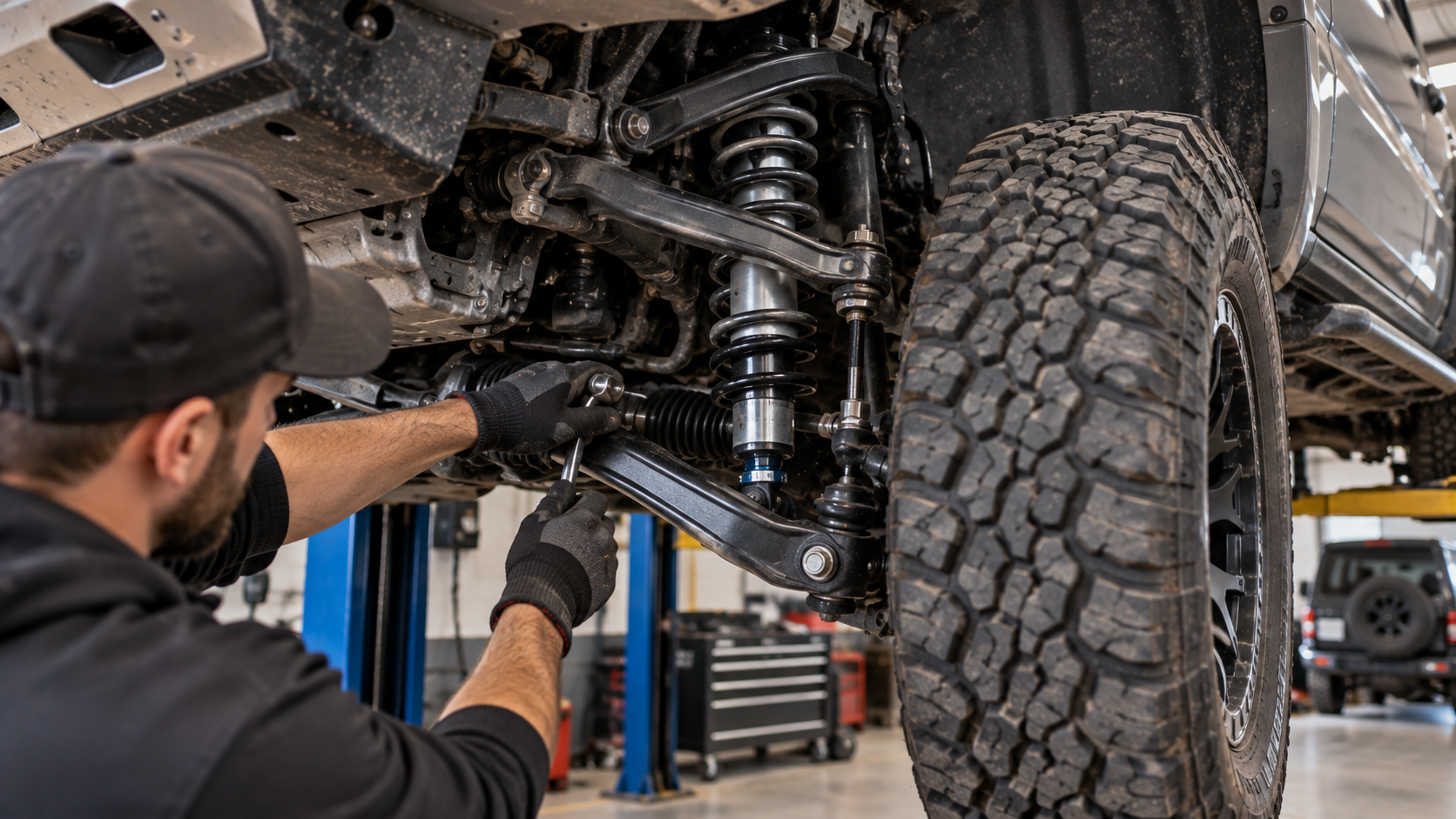
Caster, Camber, and Toe: The Alignment Numbers You Cannot Ignore
Alignment is not a cosmetic finishing step. Caster strongly influences straight-line stability and steering return; camber affects how the tire sits relative to the road; toe affects directional behavior and tire scrub. After a lift, the vehicle should be aligned to the manufacturer’s appropriate specifications or to a proven application-specific target established by a qualified specialist. Simply receiving a printout with numbers “in the green” is not enough if the steering still wanders or the two sides are poorly balanced.
ARB explicitly recommends alignment after altering suspension and explains that factory control arms may not always recover original geometry on lifted IFS vehicles. BILSTEIN likewise designs control arms with increased caster to maintain correct alignment specifications. These manufacturer statements support a simple rule: if a lift kit changes static suspension position, budget for alignment from the beginning and verify that the hardware actually provides enough adjustment to achieve the target.
Lift Height Does Not Equal Ground Clearance Everywhere
One of the most common misunderstandings is assuming that a two-inch suspension lift raises every vulnerable part by two inches. It does not. On a solid axle, the differential housing remains tied to tire radius; larger tires are what raise that housing relative to the ground. A suspension lift can raise the body, frame, rocker area, and some crossmembers while improving approach, breakover, or departure relationships, but the exact benefit depends on architecture. On IFS vehicles, some central components may move with the chassis while control arms and knuckles still occupy their own geometric envelopes.
That is why tire choice and lift choice should be planned together. The existing AT, MT, and hybrid tire guide explains how tread type affects the way a vehicle behaves on and off pavement. Tire diameter can create genuine under-axle clearance, but larger tires also add mass, change effective gearing, increase braking demand, and create new clearance problems at full steering lock and full compression. A lift should create room for the tire you need, not become an excuse to fit the largest tire the body can visually accommodate.
How Lift Height Affects Daily-Driver Stability
Raising a vehicle also raises some of its mass. The exact center-of-gravity change depends on what moves upward, what parts are replaced, tire size, roof load, bumpers, armor, passengers, and many other variables, so there is no honest universal formula that says a given lift produces a fixed percentage change in rollover risk. The direction of the tradeoff is nevertheless important: a taller, top-heavier vehicle generally has less geometric margin than an otherwise comparable lower vehicle.
NHTSA uses the Static Stability Factor in rollover-resistance evaluation; the measure relates track width to center-of-gravity height and is intended to characterize how top-heavy a vehicle is. That does not mean a modest lift automatically makes a vehicle unsafe. It means height is not free. Combine a tall suspension with a roof tent, spare tire, fuel, recovery gear, and cargo stored high, and the difference in body motion can become obvious in lane changes, ramps, crosswinds, and side slopes.
Watch for these daily-driving warning signs after a lift:
- The steering no longer self-centers normally after a turn.
- The vehicle wanders or needs constant small corrections on a straight highway.
- New vibration appears under acceleration or at a specific road speed.
- The front suspension tops out sharply over dips or extension events.
- Tires rub at full lock, full compression, or with passengers and cargo aboard.
- Body roll feels substantially less controlled than before the modification.
- Uneven tire wear appears despite a recent alignment.
- Electronic safety or driver-assistance warnings appear after ride-height or tire-size changes.
Any of these symptoms deserves diagnosis rather than acceptance as “what lifted trucks do.” Some additional body motion may be inherent to the new setup, but poor alignment, mismatched damping, incorrect spring rate, excessive joint angle, or insufficient travel can often be corrected. A good daily-driver lift should feel intentionally tuned, not merely taller.
A Practical Way to Choose Lift Height
The most reliable process starts with measurements and ends with validation. Record current hub-to-fender height, clearance at vulnerable components, tire-to-body gaps at steering lock, and how the vehicle sits with its normal load. Research the specific platform rather than relying on generic “two-inch” or “three-inch” advice. Then choose the smallest system that solves the documented problem while retaining the travel and alignment you need.
Use this sequence before committing to a lift:
- Measure the vehicle at normal operating weight and note any existing sag.
- Choose the tire diameter and width based on terrain, gearing, brakes, and available body clearance.
- Identify the minimum suspension height needed to clear that tire through steering and compression.
- Check manufacturer documentation for required control arms, links, bump stops, brake hoses, driveshaft changes, or differential corrections.
- Confirm shock travel and bump-stop strategy so added height does not simply trade compression for droop.
- Install the complete matched system rather than mixing unrelated parts based only on advertised height.
- Torque suspension pivots according to the vehicle/component manufacturer’s procedure and ride-height requirements.
- Perform a professional wheel alignment and retain the before/after measurements.
- Cycle steering and suspension where practical, inspect hose/wire clearance, and road-test progressively.
- Recheck fasteners, tire clearance, alignment behavior, and component wear after the initial break-in period.
This process may lead to a less dramatic lift than the one you first imagined. That is often a good result. The vehicle keeps more of its road manners, places less additional angular demand on joints, and requires fewer corrective components while still gaining the tire clearance and trail function that justified the modification.
Conclusion: Choose the Smallest Lift That Solves the Real Problem
For a daily-driven 4x4, the best suspension lift is rarely the tallest kit you can fit. It is the smallest complete, correctly sprung, correctly damped, and correctly aligned system that clears the tire and terrain you genuinely need. A mild lift can preserve much of the factory driving character while adding useful room and clearance. A moderate lift can work extremely well when geometry correction and supporting components are part of the plan. Taller builds can be capable, but they increasingly become systems-engineering projects rather than simple bolt-on upgrades.
Start with measurements, vehicle load, tire requirements, and real trail evidence. Treat caster, camber, toe, joint angles, suspension travel, and center-of-gravity changes as design constraints—not annoying details to solve afterward. Then align, inspect, and road-test the finished vehicle before assuming the job is complete. The result may not win a parking-lot height contest, but it is far more likely to be the 4x4 you still enjoy driving Monday morning after spending Sunday on the trail.