| Grit Line Motors Meta Description: Learn what really determines safe SUV water-crossing depth, how to assess a ford, avoid engine damage, and know when turning around is the only safe choice. Slug: /safe-suv-water-crossing-depth/
How Deep Can You Safely Drive Through Water in an SUV?
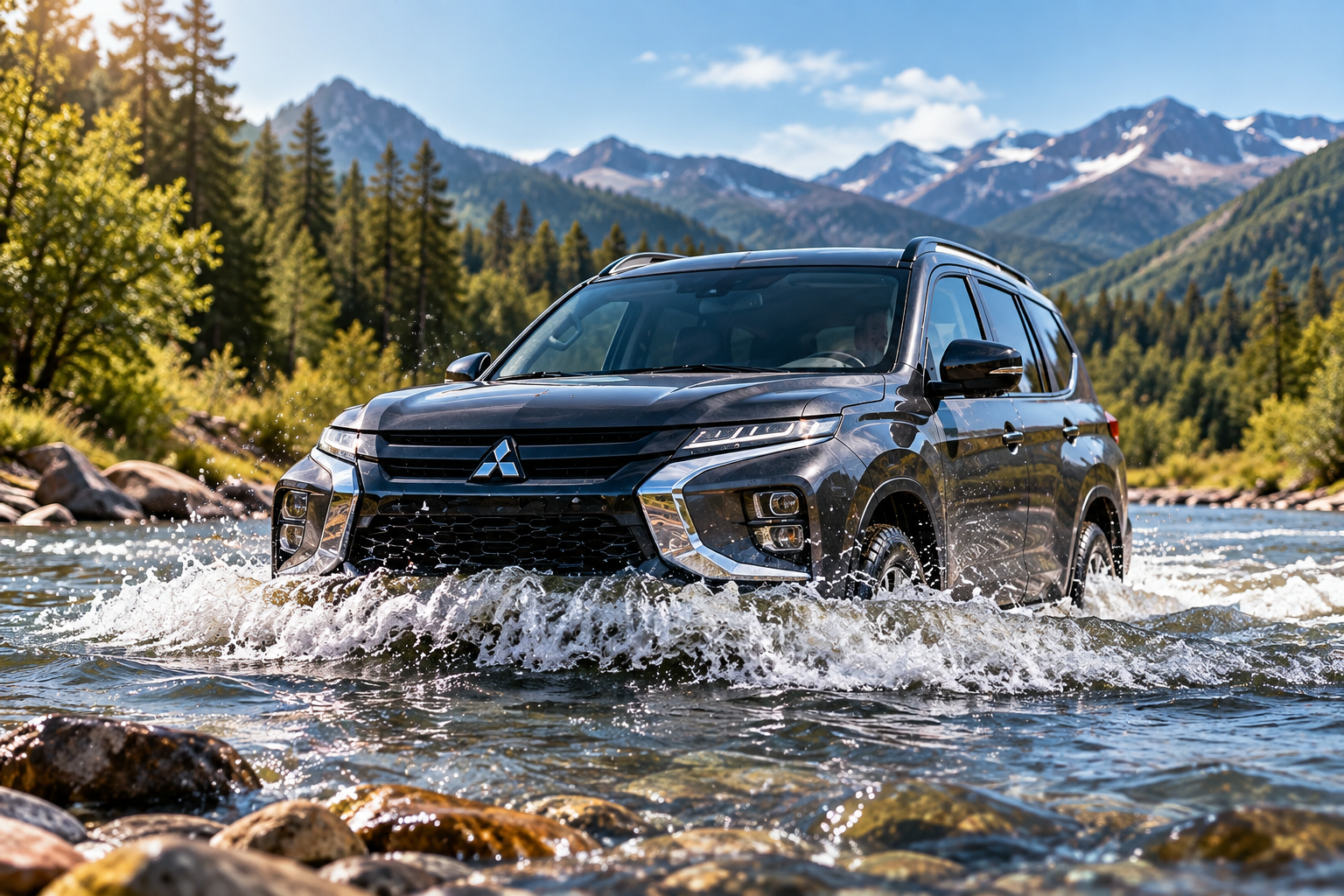
Driving an SUV through water looks simple when the crossing is short and the vehicle has plenty of ground clearance. In reality, water adds risks that do not exist on an ordinary trail: you may not be able to see the bottom, the current can push against the vehicle, hidden holes can change the depth without warning, and water entering the engine or drivetrain can turn a few seconds of driving into a very expensive recovery. The safest depth is therefore not a universal number that applies to every SUV.
A controlled off-road ford is also very different from a flooded public road. This article discusses planned crossings on established trails where the route, bottom, current, weather, and vehicle can be evaluated. The National Weather Service advises drivers never to enter floodwater because the road underneath may be damaged or missing and moving water can carry vehicles away. If a road is flooded, barricaded, or affected by a flash-flood warning, turn around rather than treating it as an off-road obstacle.
What Determines an SUV's Safe Water-Crossing Depth?
The first limit is the vehicle manufacturer's specification. Some off-road-oriented vehicles have a published wading depth under defined conditions, while other SUVs do not. That number reflects much more than how high the body sits above the ground. Air-intake position, electrical connectors, axle and transmission breathers, cooling fans, door seals, underbody components, and vehicle speed can all affect what happens when the vehicle enters water.
A published wading depth should be treated as a maximum operating limit under suitable conditions, not as a target. Real crossings can contain soft sediment, submerged rocks, holes, cross-currents, or an exit that is steeper than it appears from the driver's seat. Vehicle load matters too: passengers, cargo, armor, recovery equipment, and accessories can reduce ride height. Before attempting any planned ford, check the owner's manual for the exact model and configuration instead of relying on a generic SUV number.
Ground Clearance and Wading Depth Are Not the Same Thing
Ground clearance tells you how much space exists beneath a specified low point of the vehicle on dry ground. Wading depth describes the manufacturer's limit for operating through water, when such a specification is provided. An SUV can have generous ground clearance while still having an intake, alternator, electrical component, or breather positioned where deeper water creates a problem. A suspension lift may change body height without making every vulnerable component equally water-resistant.
That distinction is why judging a crossing from tire height alone is unreliable. Water reaching halfway up a large tire may represent a very different situation on two vehicles with different intake layouts and driveline designs. If you are building a trail vehicle, our guide to how much ground clearance you actually need for off-roading is useful for dry-terrain clearance decisions, but it should never be substituted for the manufacturer's water-crossing guidance.
Why Moving Water Is More Dangerous Than Still Water
Depth is only one part of the problem. Flowing water applies lateral force to the vehicle, and buoyancy reduces the tire load that produces traction against the bottom. As the vehicle becomes lighter on its tires, the current needs less force to move it sideways. A heavy SUV is not immune. The National Weather Service warns that roughly 18 to 24 inches of fast-moving water can carry away larger vehicles, including SUVs and trucks.
This is also why flood-safety numbers should not be interpreted as allowable crossing depths. They describe danger, not permission. The National Weather Service says it is never safe to drive into floodwater and notes that the depth and condition of a submerged roadway cannot reliably be determined by looking at the surface. A planned trail ford should be abandoned whenever the water is fast, rising, muddy enough to hide hazards, or connected to storm or flash-flood conditions.
What Can Water Damage on an SUV?
The most dramatic concern is water entering the engine's air intake. An internal-combustion engine is designed to compress an air-fuel mixture, not a cylinder full of liquid. If enough water reaches a cylinder, the engine can stop abruptly and internal components can be damaged. Restarting an engine that stalled in deep water can make the situation worse, so a water-related stall should be treated as a recovery and inspection problem rather than an invitation to keep cranking the starter.
Water can also affect wheel bearings, differentials, transmission or transfer-case breathers, electrical connectors, brakes, interior materials, and other components depending on the vehicle. Hot driveline assemblies cool rapidly when submerged, which can contribute to pressure changes around vents and seals. Even when the SUV exits under its own power, a deep crossing may justify inspection or fluid checks specified by the manufacturer, especially if water reached hubs, axles, or other service-sensitive components.
How to Evaluate a Planned Off-Road Water Crossing
A safe decision is made before the front tires enter the water. Stop where you can assess the approach without blocking the trail. Look for a clearly established crossing rather than creating a new route along the bank. Consider recent rainfall upstream, the color and speed of the water, visible debris, the condition of the exit, and whether the level appears to be changing. If you cannot establish what is under the surface without exposing yourself to moving water, the uncertainty itself is a reason to turn around.
Before committing to a crossing, verify these conditions:
- The crossing is an established trail ford, not a flooded public road.
- The water level is stable and comfortably below the vehicle's documented limit.
- The current is weak enough that it is not pushing debris or visibly deflecting the vehicle path.
- The bottom and exit are known to be firm enough for the vehicle.
- There are no hidden drop-offs, deep holes, large submerged rocks, or washed-out sections.
- The route provides a clear exit without stopping in the deepest part.
- Recovery equipment and another suitable vehicle are available when the trail warrants them.
No checklist can make an unknown crossing safe. If one of these conditions cannot be verified, the conservative choice is to find another route. The cost of turning around is usually time; the cost of guessing wrong can include a flooded engine, a stranded vehicle, environmental damage, or a dangerous recovery in moving water.
How Should You Drive Through a Known, Shallow Ford?
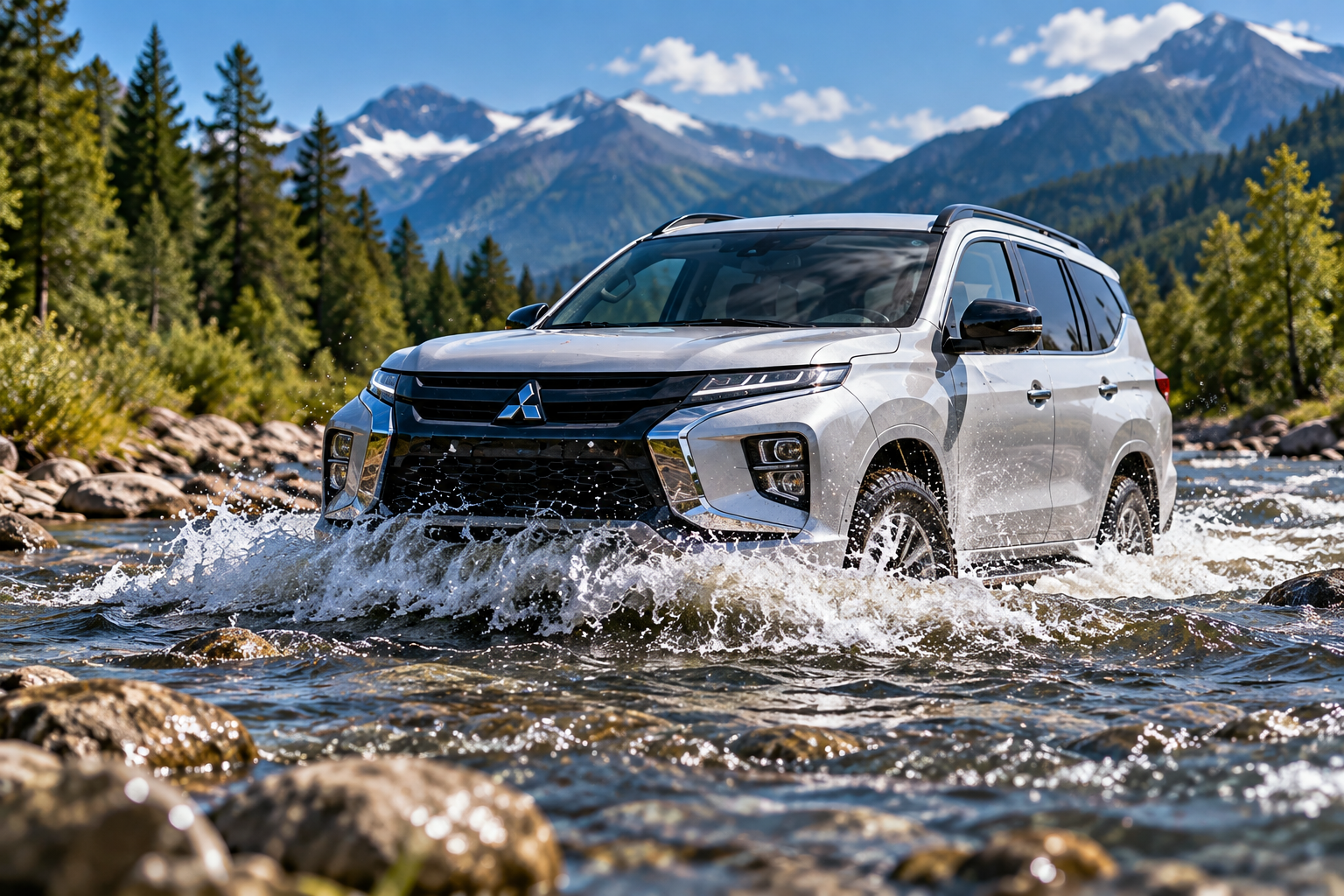
Vehicle-specific instructions come first because manufacturers may prescribe a drive mode, gear range, speed, or other procedure. In general, a controlled crossing calls for smooth inputs and a steady, low speed. Charging into water creates a large bow wave and can force water into places it would not reach at a calmer pace. Stopping in the deepest section can also remove momentum and leave the vehicle sitting in water longer than necessary.
A sensible sequence for an established crossing is:
- Read the owner's manual and confirm the vehicle's water-crossing guidance.
- Inspect the crossing and exit before entering.
- Select the appropriate drive mode or low range if the vehicle manufacturer recommends it.
- Enter slowly and smoothly rather than striking the water at speed.
- Maintain a controlled, consistent pace and avoid abrupt acceleration or steering.
- Follow the known line to the exit without unnecessary stops.
- After leaving the water, test braking response gently in a safe area and inspect the vehicle as appropriate.
This sequence assumes the crossing has already passed the safety assessment. It is not a method for making floodwater, strong current, unknown depth, or a washed-out road acceptable. If conditions change while you are evaluating the ford, reassess instead of letting the fact that you already stopped and prepared pressure you into completing it.
Why Speed Can Turn a Manageable Crossing Into a Problem
Drivers sometimes assume that extra momentum will help an SUV punch through water. Excessive speed usually creates a different set of risks. The front of the vehicle pushes a larger mass of water outward and upward, visibility can disappear behind spray, and the bow wave can rise above the static water level. A hidden rock or hole also becomes much more severe when it is hit with speed.
Too little speed can be a problem on a soft bottom, but the solution is not a dramatic run-up. The objective is controlled progress appropriate to the vehicle and terrain. If a crossing seems to require high speed to prevent getting stuck, that is evidence that the route may not be suitable for the vehicle in its current condition. Traction, tires, gearing, and bottom firmness matter more than trying to overpower uncertainty with momentum.
Do Bigger Tires or a Lift Increase Safe Wading Depth?
They can change parts of the equation, but neither modification automatically raises the manufacturer's water limit. Taller tires can increase axle clearance, and a suspension lift can increase clearance between some chassis components and the ground. At the same time, the air intake, electronic modules, door openings, breathers, cooling system, and sealing strategy may remain unchanged. The vehicle may sit higher while its critical water-sensitive systems have gained little or no additional protection.
This is a good example of why modifications should solve a specific problem rather than chase a visual benchmark. If larger tires are part of the build, our guide to choosing the right off-road tire size explains how diameter affects clearance, gearing, braking, fitment, and daily driving. Those changes can improve trail capability, but they should not be converted into a homemade wading-depth calculation.
Tire Pressure and Traction in Water Crossings
Airing down can improve traction and ride quality on many off-road surfaces, but water itself is not a reason to choose an arbitrary low pressure. The bottom may be rock, gravel, sand, mud, or a mixture of surfaces, and the correct pressure depends on tire construction, wheel setup, vehicle weight, speed, and the rest of the trail. Extremely low pressure can introduce bead-retention and sidewall risks that are unrelated to the water depth.
What Should You Do After the Crossing?
Once the SUV is on firm ground, do not assume that a successful exit means nothing needs attention. Brakes can be wet and may respond differently until they dry. Mud, vegetation, and stones can lodge around underbody components. A crossing that reached hubs or driveline components may trigger inspection or maintenance requirements in the owner's manual, and any unusual warning light, vibration, smell, noise, or fluid appearance deserves attention before continuing deep into the trail.
A practical post-crossing check includes:
- Apply the brakes gently at low speed in a safe area to confirm normal response.
- Look for debris caught around wheels, suspension, underbody protection, and cooling openings.
- Check for warning lights or changes in steering, braking, or driveline behavior.
- Inspect the cabin for unexpected water intrusion.
- Follow manufacturer guidance for checking or servicing fluids after deep-water use.
- If the engine stalled in water, do not repeatedly restart it; recover and inspect the vehicle first.
The deeper the crossing and the longer the vehicle was submerged, the more important the inspection becomes. Water contamination is not always immediately obvious, and discovering it at home is preferable to finding out after a bearing, differential, or electrical component begins to fail far from assistance.
When Should You Turn Around?
Turn around when the depth is unknown, the bottom cannot be verified, the current is strong, the water is rising, the exit is damaged, the route is officially closed, or the crossing exceeds the manufacturer's guidance. Turn around if you are alone without an appropriate recovery plan in a remote area. And always turn around at floodwater on a road. The National Weather Service's “Turn Around Don't Drown” guidance exists because drivers routinely underestimate both water depth and the force of moving water.
Good off-road driving is not measured by how many obstacles you force the vehicle through. It is measured by whether you can recognize the difference between a calculated challenge and an unnecessary gamble. A bypass or retreat may be less dramatic, but it protects the occupants, the vehicle, the trail, and anyone who might otherwise have to attempt a recovery.
Conclusion
So, how deep can you safely drive through water in an SUV? There is no reliable universal depth. For a controlled off-road ford, the upper boundary is the specific vehicle manufacturer's published guidance, and the practical limit may be much lower once current, bottom conditions, load, visibility, weather, and the exit are considered. Ground clearance, tire size, a lift, or a snorkel cannot replace that vehicle-specific limit.
The most important distinction is between an established, evaluated trail crossing and floodwater. A shallow known ford in stable conditions can be part of responsible off-road travel when the vehicle is designed for it and the driver follows the manual. Flooded roads, rising water, strong currents, and unknown crossings are different: turn around. The best water crossing is not the deepest one your SUV can survive; it is the one you can assess, complete conservatively, and drive away from without damage or unnecessary risk.